 Ushuaia City Guide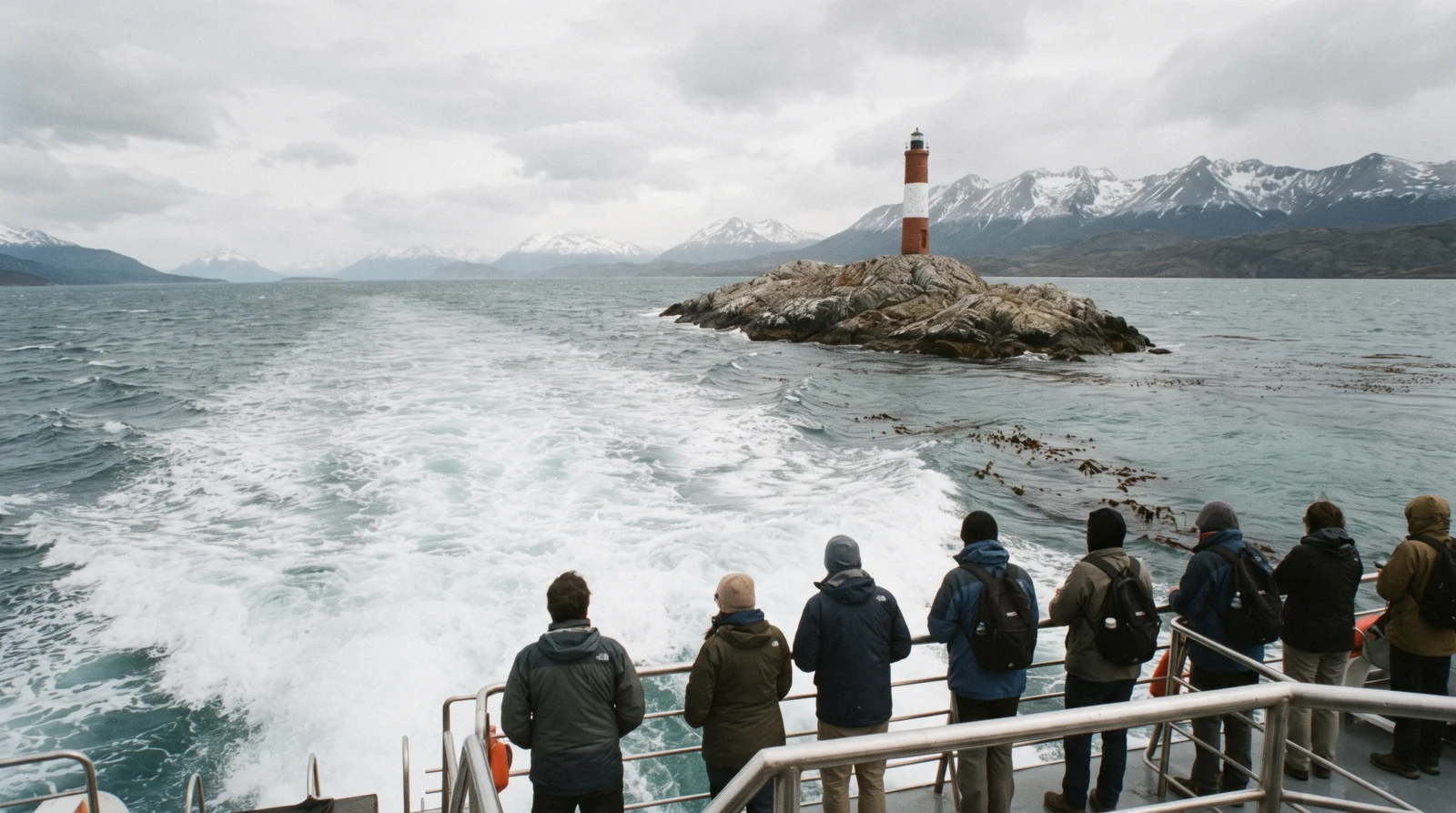
Beagle Channel Boat Tours: Which Sailing Is Worth It
Almost every visitor to Ushuaia ends up on a beagle channel boat, and for good reason. The channel is the city's front yard, and the wildlife, the lighthouse and the view of two countries at once come from the water, not the shore. This page compares the sailings so you can pick one that fits your dates, budget and stomach. The whole guide starts on the Ushuaia city guide.
Quick answer The short version on beagle channel boats
The classic beagle channel navigation is a three-hour catamaran run from the Ushuaia municipal pier to the bird islands, the sea lion colony at Isla de los Lobos and the Les Eclaireurs lighthouse, priced from $66.30 to $120 as listed on the platform. These sailings run all year. Penguin sailings to Isla Martillo only run from October to April. Every sailing is weather dependent and can move or cancel in strong wind.
Key takeaways
- Compare all four sailings side by side in the comparison table.
- The cheapest year-round option is the classic 3-hour cruise at $66.30.
- For the penguin season rules and the licensed landing, see the penguin page.
Key facts
Opening hours
| Sailings daily | 09:30–17:00 |
|---|
Admission
- Adult
- 3-hour classic $66.30-$120 as listed
- Reduced
- Platform child pricing varies by operator
Planning it
- Time needed
- 2.5-3 hours for the classic navigation
- Book ahead
- Optional — walk-up usually fine
- Address
- Ushuaia municipal tourist pier, Avenida Maipu
The Four Channel Sailings Compared
Do you want the shortest certified channel fix, or the longest day for your money? The table below lines up the four channel sailings sold on the booking platform at the time of our check. Prices are the platform listing prices in US dollars, times and routes are the operator listing text, and the cancellation column is each listing's stated deadline. No operator here publishes an official peso price list that we could find, so the platform figures are the only consistent ones.
| Option | Price | Time | Route | Cancel | Book |
|---|---|---|---|---|---|
| Official tourism info (no ticket sales); For anyone who wants to confirm sailing schedules with the city tourism office before booking | Free information | Daily roughly 8:30-20:30 at Infotur | Av. San Martin 674, Ushuaia | n/a | Official site |
| Beagle Channel Catamaran Cruise (Tolkeyen); For budget travellers and anyone who wants the classic route at the lowest listed price | $66.30 | 3 hours | Bridges Islands, sea lions, Les Eclaireurs, short Karelo Island hike | 24 hours | Check Availability |
| Beagle Channel & Bridges Islands (Gray Line); For travellers who want the long-established standard navigation with a big operator | $90 | 3 hours | Bridges Islands, sea lions, cormorants, Les Eclaireurs | 24 hours | Check Availability |
| Beagle Channel & Sea Wolves Island (Canoero); For photographers who want the optional onshore viewpoint hike and the extra islands | $120 | not stated on listing | Sea Lion Island, Bird Island, Les Eclaireurs, optional 20-minute viewpoint hike | 24 hours | Check Availability |
| Beagle Channel to Isla de los Lobos (Funny Times); For travellers watching the discount tier, which can make this the cheapest afternoon on the water | $100.32 | 3 hours | Isla de los Lobos, seabirds, Les Eclaireurs | 24 hours | Check Availability |
Durations, prices and routes come from each platform listing, not from the operators' own sites. Child pricing varies by operator and is not stated uniformly. Figures current for 2026.
Bookable Channel Sailings
These are the four channel sailings compared above, plus the standard penguin day that starts on the same pier. Durations and prices are the tour listings.
 from $66.30
Best seller
from $66.30
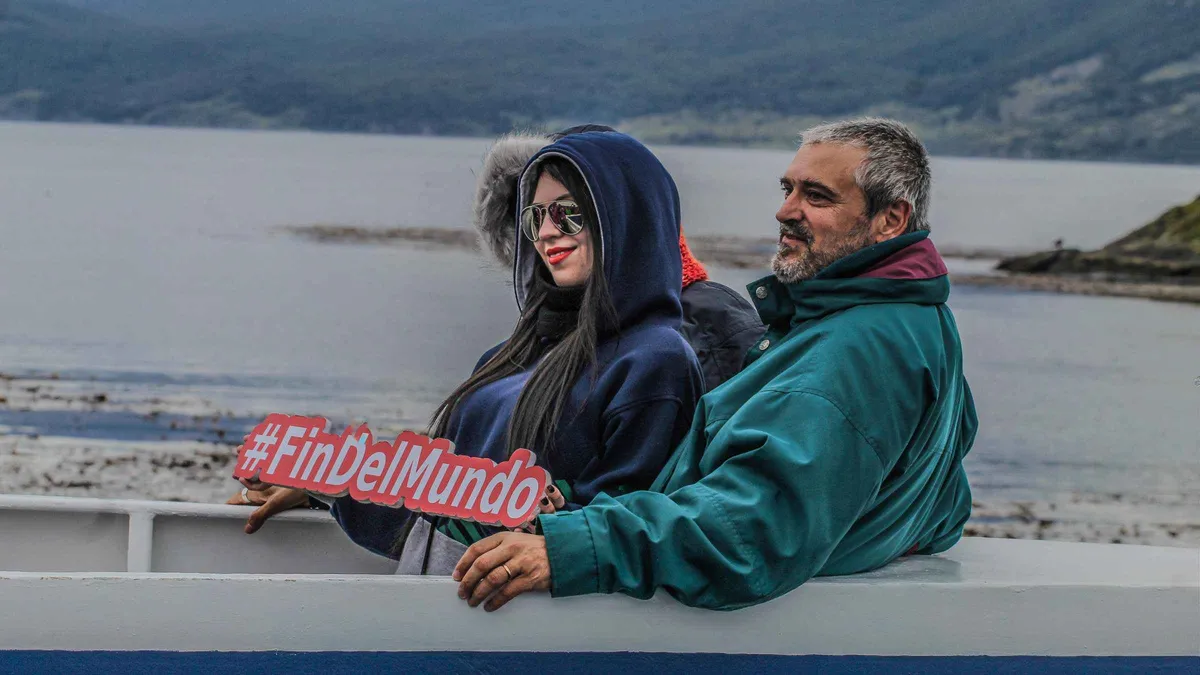
Best seller From Ushuaia: Beagle Channel Catamaran Cruise
The classic three-hour channel crossing to the sea lion colony at Isla de los Lobos and the bird islands, passing the Les Éclaireurs lighthouse. The shortest way to say you have sailed the Beagle Channel.
Check Availability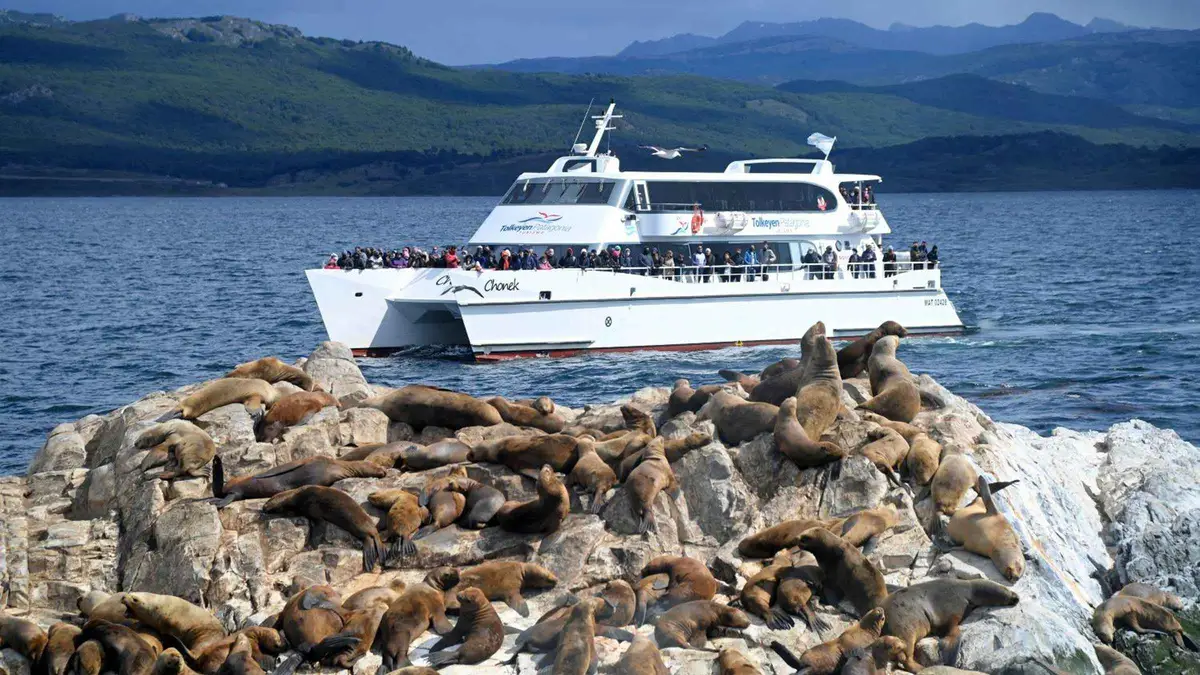 from $90
Ushuaia: Navigation through Beagle Channel & Bridges Islands
The long-running standard navigation: Bridges Islands, the sea lion rocks, cormorant colonies and the lighthouse in three hours. Dozens of departures a day in high season.
Check Availability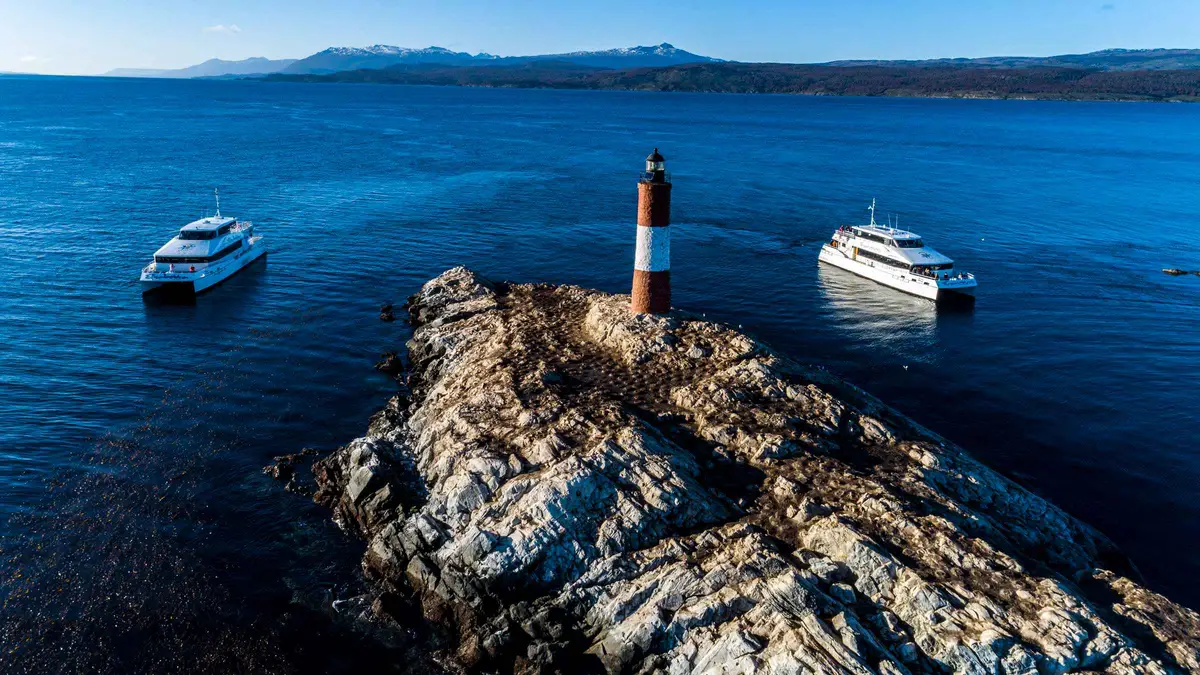 from $120
Ushuaia: Beagle Channel & Sea Wolves Island Catamaran Cruise
A shorter two-and-a-half-hour version that concentrates on the sea wolf island and bird colonies. Suits late arrivals and cruise passengers working around a sailing time.
Check Availability from $100.32
Beagle Channel navigation to Isla de los Lobos
Same channel itinerary to Isla de los Lobos with a Spanish and English crew. Watch the discount tier, which makes it one of the cheapest afternoons on the water.
Check AvailabilityPrices, ratings and details are the platform's own. dollar figures are the listed prices — the platform bills in your account's currency.
What You Are Sailing
Before choosing a boat it helps to know what the beagle channel actually is, because most visitors carry two or three wrong assumptions off the plane.
A Channel With A British Name
The beagle channel takes its name from HMS Beagle, the survey ship that charted it during the 1826-1830 expedition under Phillip Parker King and then Robert Fitz Roy. Charles Darwin sailed these waters on the same ship in 1833 on the second voyage. So the name is British, the water belongs to both countries, and the geography is stranger than most visitors expect.
The channel runs east-west for roughly the length of the island's south coast, and from the water you can see Argentina on the north shore and Chile on the south shore at the same time. That two-country view is one of the quiet pleasures of the crossing, and the guides point out the border markers on the small islands in the middle.
How Big It Feels
The channel is a few kilometres wide along the Ushuaia stretch, which is narrow enough that the mountains on both shores stay in frame from the deck. On a clear day the light is sharp and the water sits in bands of grey-blue and green where the kelp forests lie. What surprises visitors is not the size but the wind.
The prevailing wind comes from the west, funnelling along the channel's long axis, and it can double in strength within minutes. The archipelago of small islands east of the city shelters the classic route, which is why the standard sailings are usually calm even on days when the flags in town are snapping hard.
The Climate Reality
Ushuaia sits at 54 degrees 48 minutes south, and the numbers are modest rather than extreme. The coldest month, July, averages a high near 1 C (34 F) and a low near -3.5 C, and the warmest month, February, averages a high near 12.4 C (54 F). Average daily maximum wind runs highest from December to March, peaking at 18.1 metres per second in December in the long-term archive we use.
Daylight swings from about 17 hours around the December solstice to about 7.5 hours around the June solstice. The practical translation: dress for wind chill rather than for the air temperature, and know that the sea is almost always colder than the sky.
The Lighthouse Confusion, Settled
Here is the honest paragraph. The lighthouse every standard tour passes is Les Eclaireurs, built in 1919, standing on its own islets about 5 nautical miles east of Ushuaia. It is unmanned and solar-powered.
It is NOT the Faro del Fin del Mundo, the Lighthouse at the End of the World from Jules Verne's novel. The real one sits at San Juan de Salvamento on Isla de los Estados, far to the east, and no day trip from Ushuaia reaches it. Tour marketing blends the two constantly, and the Museo Marítimo even displays a replica of the true End of the World lighthouse.
Enjoy Les Eclaireurs, take the photo, but know which one you are photographing.
Channel naming and survey history per Wikipedia. Lighthouse facts per our Les Eclaireurs page and SHNA records. Climate figures from the Open-Meteo ERA5 archive 1995-2024.
The Classic Three-Hour Route
Nearly every standard navigation follows the same arc out of the harbour and back, and the order of the stops tells you why the trip works as well as it does. The first islands bring the birds, the second brings the mammals, and the lighthouse closes the loop with the photograph everyone came for.
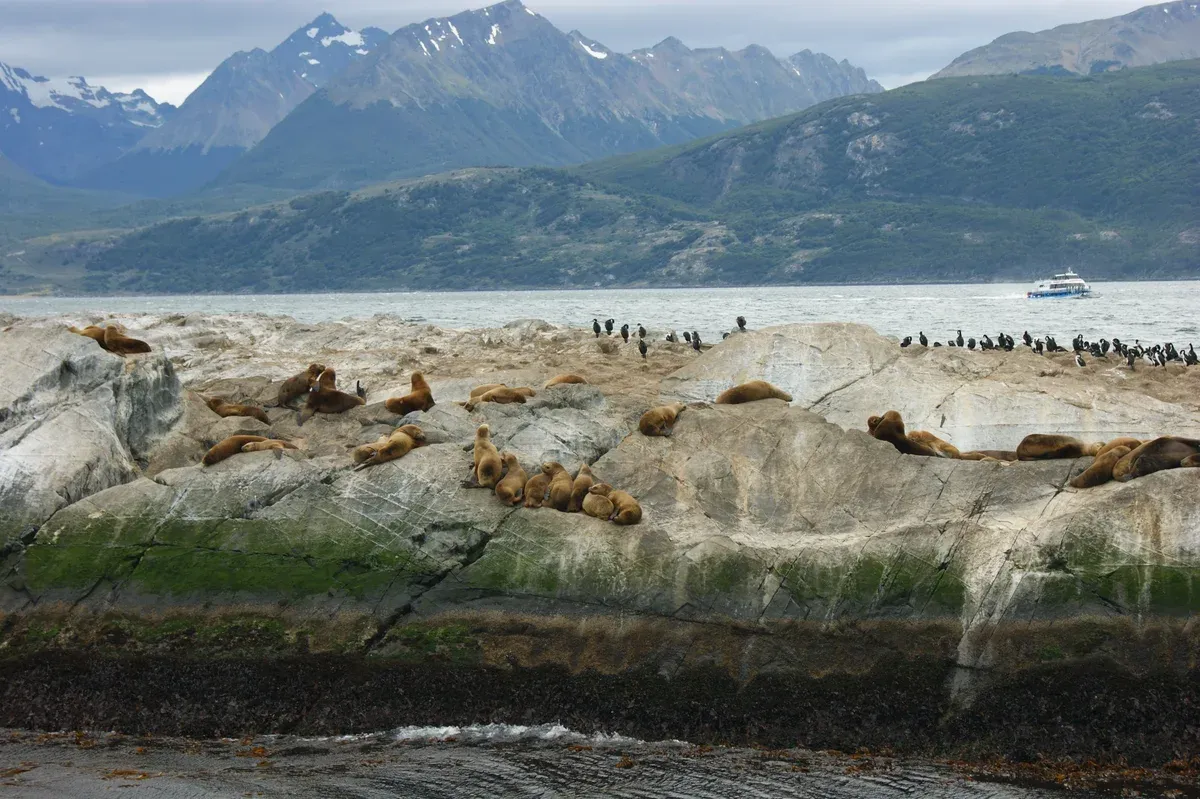
Sea lions and cormorants on the channel rocks: the stops the classic three-hour navigation is built around. Photo: NTNU Vitenskapsmuseet (H. M. Breivik), CC BY 2.0, via Wikimedia Commons
Bridges Islands
The catamarans head east out of the harbour and the first proper stop is the Bridges group, low rocky islands that carry some of the densest seabird traffic in the channel. The draw here is the cormorant colonies, rows of dark birds packed onto the rocks and the kelp edges, with skuas and gulls working the water between them. The islands sit close to the channel's border markers, so guides usually combine the bird talk with the Argentina-Chile story.
Practically, this stretch is where you work out how you feel about the swell. The water behind the islands is sheltered, the open water before them is not. Keep your first photos short and check your seasickness plan before the second half of the trip, because the stops get better from here.
Isla de los Lobos
The mammal stop of the classic route is Isla de los Lobos, the island of the sea wolves, where a colony of South American sea lions hauls out year round. The boats slow down and circle at a respectful distance, and the animals are loud before you see them. Bulls bellow, pups answer, and the smell arrives on the wind a moment before the rocks come into view.
Numbers and ages on the rocks change with the breeding cycle, so no guide promises a count. This is the stop where the deck rails get crowded on the correct side, so claim your spot early and keep your camera strap short. The crossing from the Bridges group is short, and you will usually hear the colony from the previous island on a quiet day.
Les Eclaireurs Lighthouse
The turn-around point of most sailings is the Les Eclaireurs lighthouse, standing on its own islets about 5 nautical miles east of the city. It was built in 1919, it is unmanned, and it runs on solar power. Boats pass close enough for the classic photograph with the red-and-white tower against the mountain wall, but they do not land.
The water around the islets carries more wildlife, and cormorants and terns work the kelp lines at the base of the tower. And once more, because guides and brochures blur it daily: this is not the Faro del Fin del Mundo of the novel, which stands on Isla de los Estados far to the east. What you are photographing is a working 1919 navigation aid, and that is a better story anyway.
On the way back most boats run straight to the pier, so this is the last long stop.
The Birds Between
The stops are named, but much of the three hours is the water between them, and that water is busy. Black-browed albatross and giant petrels pass the channel on their working routes, steamer ducks paddle furiously close to shore, and terns and gulls follow the boats. Guides narrate in English and Spanish on the listings compared here, and the commentary on the birds is usually stronger than the commentary on the geography, so ask questions.
Our practical note: the outer deck is the right place to be for the birds, but it is also where the wind chill bites, so bring the windproof layer on board rather than leaving it in a bag below. Binoculars are worth carrying if you own them, because the boat does not supply any.
Route details per the operator listings for the classic cruise and the Gray Line navigation. Lighthouse facts per our Les Eclaireurs page.
Which Sailing, by Traveller
All four sailings cover the same core water, so the choice is really about your schedule, your budget and what you want out of the extra islands. The table below maps the four most common traveller types onto the four listings, and the prices quoted are the platform listing prices.
The decision matrix below compares the four sailings against the four traveller profiles we see most often. Figures come from the platform listings compared earlier on this page, and the recommendations in the final column are our own judgement.
| Traveller | Best fit | Why | Price anchor |
|---|---|---|---|
| Cruise passenger | tour-9, earliest slot | Three hours fits a port day, and an early slot leaves weather margin before your ship sails | $66.30 |
| Budget traveller | tour-12 discount tier | Same core route to Isla de los Lobos, and the discount tier can undercut everything else on the water | $100.32 list, watch the discount |
| Photographers | tour-11 | The optional 20-minute viewpoint hike puts you above the water line, and late light on the channel is the best light | $120 |
| Families with children | Morning slot on tour-9 or tour-10 | The sea is calmest in the morning, three hours is the right length for young attention spans | $66.30-$90 |
Our Pick
Our pick for most visitors is the plain three-hour classic, and among the listings here that is the Beagle Channel Catamaran Cruise. It is the cheapest, it has the largest review base on the platform, and the route it covers is the route that made the navigation famous. The premium and alternative sailings earn their extra cost in two specific cases, the viewpoint hike for photographers and the smaller-boat feel on the discount-tier listing, but neither changes what you will actually see on the water.
If you have only one free afternoon in Ushuaia, book the classic, take the morning sailing, and keep the rest of the day for the Museo Marítimo.
Prices and durations per the platform listings for tour-9, tour-10, tour-11 and tour-12. Recommendations are our own judgement.
Season, Weather and Rough Water
The channel sails all year, which surprises visitors who assume Patagonia closes for winter. The real seasonal variable is not whether boats run but how the water behaves, and that changes the answer for anyone prone to seasickness.
The Wind Calendar
Sailings run daily year round, with the official city tourism window listing departures from 09:30 to 17:00. The wind is the seasonal factor that matters. In the long-term climate archive for Ushuaia, average daily maximum wind runs highest from December through March, peaking around 18.1 metres per second in December, and lowest in June at about 11.8 metres per second.
This inverts most travellers' assumptions. The southern summer, which is peak season, is also the windiest season. The trade is daylight and wildlife against rougher afternoons, and the fix is simple: take the morning sailing.
Where The Water Gets Rough
The classic route is mostly sheltered, because the small islands east of the city break the swell before it reaches the crossing lines. The exposed stretches are the open water between island groups, and the far legs of the penguin and full-day routes that run past the last islands. On a windy afternoon the swell behind the islands can stack up short and sharp, which is the kind of motion that turns stomachs even when the sky is blue.
The boats themselves are large catamarans with inside cabins, so nobody is forced on deck, and the crew will tell you plainly when conditions are at the edge.
Seasickness, Honestly
Take the motion-sickness pill before boarding, not when you feel ill. Most such tablets need lead time to work, and the first exposed stretch comes within the first hour. Eat something plain beforehand, avoid alcohol the night before, and stay on deck looking at the horizon rather than down in the cabin with a phone.
If you know you are badly affected, the morning sailing is doubly important, because the channel is usually calmest before the daily wind builds. Staff on all the listed sailings are used to this and will help, but prevention beats rescue on a three-hour trip.
When A Sailing Cancels
Every sailing on this page carries the same weather rule in its listing: channel crossings run subject to weather, and sailings can move or cancel in strong wind. That is not marketing caution, it is a real operational fact on this coast. When a cancellation happens, the operator's first move is rebooking you on another departure the same day or the next day, so build slack into your schedule rather than booking the channel for the evening before a flight.
On the booking platform, every listing compared here carries a 24-hour cancellation deadline, which protects you on the booking side. The practical sequence for a weather day: call or message the operator, accept the earliest rebooking offered, and shift your land plans rather than your boat plan.
Sailing window and climate figures from turismoushuaia.com and the Open-Meteo ERA5 archive 1995-2024. Weather and cancellation rules per each platform listing.
The Penguin Sailings
The second family of channel boats adds Isla Martillo and its penguin colony to the classic route, and it carries a hard seasonal rule that catches out unwary bookers every year.
The Season Rule
Penguin sailings run only from October to April, matching the breeding season at the colony. The Isla Martillo colony is occupied for breeding roughly September or October to April, and the reliable visitor window is November to March, when the birds are settled on eggs and chicks. Outside that window there are no penguin sailings at all, and any listing or local tout selling you a penguin boat in May or September is selling a date that does not exist.
The species mix is thousands of pairs of Magellanic penguins, a smaller number of Gentoo, and the occasional King penguin. For the full picture on the colony, the species and the rules, see our Ushuaia penguins page.
From The Boat Or On The Island
There are two ways to see the colony, and the difference is bigger than the price gap suggests. The standard penguin sailing, such as the Beagle Channel and Penguin Island tour, runs a catamaran out the channel for about five hours, passing the lighthouse and sea lion rocks on the way, and views the colony from the water at a set distance. You see thousands of birds and the boat is comfortable, but you never stand on the island.
The licensed landing is a separate, much smaller operation that puts a limited number of visitors on the island for roughly an hour with a guide, walking marked paths among the burrows. Walking among penguins is only permitted with those licensed operators, and it never involves touching or feeding the birds. Landing spots sell out furthest ahead, so book early in the season.
Which To Book
If the penguins are one item on a busy itinerary, the boat version is the right call, because it bundles the classic route and the colony into one five-hour trip at $110 as listed. If penguins are the reason you came to Ushuaia, pay for the licensed landing and treat the rest of the day as recovery time. One more caution from the season rule: book the penguin boat only for dates between October and April, and if your trip falls in the southern winter, spend the money on a second full-day excursion instead, because the winter channel is beautiful and empty rather than a disappointment.
Colony season, species and access rules per turismoushuaia.com and terramar.tur.ar. Tour price per the platform listing for tour-13.
Do and Don't on the Channel
A short list of the things that separate a good three hours on the water from a cold, queasy one. All of it comes from the operator listings and the weather record rather than from guesswork.
Do
- Book the morning slot, when the channel is calmest and the weather margin is largest.
- Bring a windproof layer even on a sunny summer day, because the wind chill on deck is severe.
- Take your seasickness pill before boarding, not after the swell starts.
- Reconfirm the meeting point on the operator page at booking, since none of the listings state the pier time centrally.
- Keep a spare camera battery in an inside pocket so it does not die in the cold wind.
Don't
- Do not book a penguin boat outside October to April, because the sailings do not run.
- Do not book the channel for the evening before a flight, in case weather forces a rebooking.
- Do not lean over the rail with a loose camera strap, the decks get spray on the exposed legs.
- Do not expect a landing at Les Eclaireurs, the boats pass and circle but do not go ashore.
- Do not assume the lighthouse photo is the Faro del Fin del Mundo, it is Les Eclaireurs.
Five Things Most Visitors Do Not Know
The channel has more history packed along its length than the boat commentary can cover. These five facts come from the sources cited in brackets, and each one changes how the crossing looks.
Five facts that change how the crossing looks, each ending in its source.
- The channel is named after a ship, not an animal. HMS Beagle charted it on the 1826-1830 survey voyage, and Charles Darwin sailed it aboard the same ship in 1833. [Wikipedia, Beagle Channel]
- The lighthouse on every tour itinerary, Les Eclaireurs, was built in 1919 and runs unmanned on solar power about 5 nautical miles east of the city. The real Faro del Fin del Mundo of the novel stands on Isla de los Estados, far away. [SHNA records via our lighthouse research]
- The water you are crossing nearly caused a war. Argentina and Chile came to the brink of conflict over the channel's islands in 1978, and the 1984 Treaty of Peace and Friendship settled the border, with papal mediation between 1979 and 1982. [Wikipedia, Beagle conflict]
- The wind is seasonal and predictable. Average daily maximum wind peaks around 18.1 metres per second in December and drops to about 11.8 metres per second in June, so the summer peak season is also the roughest water. [Open-Meteo ERA5 archive 1995-2024]
- Ushuaia's daylight is extreme enough to change your booking logic. Around the December solstice there are about 17 hours of daylight, and around the June solstice about 7.5, so a winter afternoon sailing runs in near-darkness. [Astronomical record for 54 degrees 48 minutes south]
Sources named in brackets per item. Survey and conflict history per Wikipedia.
The Channel in Seven Dates
The beagle channel has been a survey route, a gold rush corridor and an international incident. Seven dates give the shape of it.
-
1520
Magellan sights the fires
Ferdinand Magellan's expedition sees fires burning on the south shore and names the land Tierra del Fuego, the land of fire. The channel itself is not yet charted.
-
1826-1830
The Beagle surveys the channel
HMS Beagle charts the waterway on the first survey voyage under Phillip Parker King and then Robert Fitz Roy, and the channel takes the ship's name.
-
1833
Darwin sails through
Charles Darwin returns to the channel aboard the Beagle on the second voyage, observations that feed into his later work on evolution.
-
1880s
Gold and sheep boom
A gold rush on the Fuegian beaches and the spread of sheep estancias along the channel bring permanent European settlement to Ushuaia.
-
1978-1984
The Beagle conflict
Argentina and Chile mobilise over sovereignty of the channel's islands in 1978. Mediation by Pope John Paul II's envoys runs from 1979 to 1982, and the 1984 Treaty of Peace and Friendship settles the border by agreement.
-
1919
Les Eclaireurs is built
The lighthouse that every tour boat now passes is completed on its islets east of Ushuaia, unmanned and later converted to solar power.
-
Today
The tourist waterway
The channel is Ushuaia's headline attraction, with catamarans running daily year round from the municipal pier on Avenida Maipu and penguin sailings each October to April.
Dates from Wikipedia, Beagle Channel, SHNA lighthouse records and the treaty record.
Map of the Classic Route
The classic three-hour route runs east from the municipal pier along the marked stops below. Distances are short, the whole loop stays inside a few miles of the city.
Near the Channel
Three pages that pair naturally with a channel sailing, all within an afternoon of the pier.
Ushuaia Penguins
The full guide to Isla Martillo, the October to April season and the licensed landing versus the boat view.
5 hours by boat from the same pierLes Eclaireurs Lighthouse
The lighthouse story in full, including the confusion with the real Faro del Fin del Mundo.
About 5 nautical miles east of the city by boatCruise Port
How port days work in Ushuaia, and how to fit a channel sailing around a ship schedule.
A short walk from the municipal pierBeagle Channel Questions
Do beagle channel boats run all year?
Yes. The classic navigations sail daily year round, with the official city tourism window listing sailings from 09:30 to 17:00. Only the penguin sailings to Isla Martillo are seasonal, running October to April.
Will I get seasick on the beagle channel?
Most people do not, because the classic route is sheltered by the islands. The exposed stretches between island groups can be short and sharp on windy afternoons, especially from December to March when average wind peaks. Take a motion-sickness pill before boarding and choose a morning sailing, when the water is calmest.
Can you see penguins from the boat without landing?
Yes, from October to April. Standard penguin sailings view the Isla Martillo colony from the water at a set distance, and you will see thousands of Magellanic penguins plus some Gentoo. Standing on the island requires a separate licensed landing tour with a guide, and spots are limited.
How long is the classic beagle channel navigation?
About three hours on the listings compared here, with the Canoero version described on its own card as a shorter run and its duration not stated on the listing. Budget half a morning or half an afternoon door to deck to dock.
Is Les Eclaireurs the same as the Lighthouse at the End of the World?
No. Les Eclaireurs was built in 1919 on islets about 5 nautical miles east of Ushuaia and is what every tour passes. The true Faro del Fin del Mundo stands at San Juan de Salvamento on Isla de los Estados, far to the east, and no day trip from Ushuaia reaches it.
What should I wear on a beagle channel boat tour?
Dress for wind chill, not for the air temperature. A windproof layer is essential on deck even on a mild summer day, and the coldest month, July, averages highs near 1 C, so winter sailings need full winter kit. There is no dress code, just practical warmth, and keep camera gear strapped short in the spray.
The Channel on Video
Three videos that show the classic route and the penguin extension as the boats actually run them.
EPIC Boat Adventure on the Beagle Channel in Ushuaia, Argentina
A deck-level run through the classic navigation with the islands and the lighthouse as they appear from the water.
Video: Brent TimmBeagle Channel Boat Tour | Penguins, Sea Lions & Les Eclaireurs Lighthouse – Ushuaia, Patagonia
The full penguin-extension itinerary on film, covering the sea lion rocks and the lighthouse before the colony.
Video: Atlas of ElsewhereThe Beagle Channel & The Island Of Penguins | Ushuaia, Argentina
A documentary-style look at the channel and Isla Martillo, useful for judging what the boat view of the colony gives you.
Video: The MomadWe may earn a commission if you book through one of our links, at no extra cost to you. Full affiliate disclosure