 Ushuaia City Guide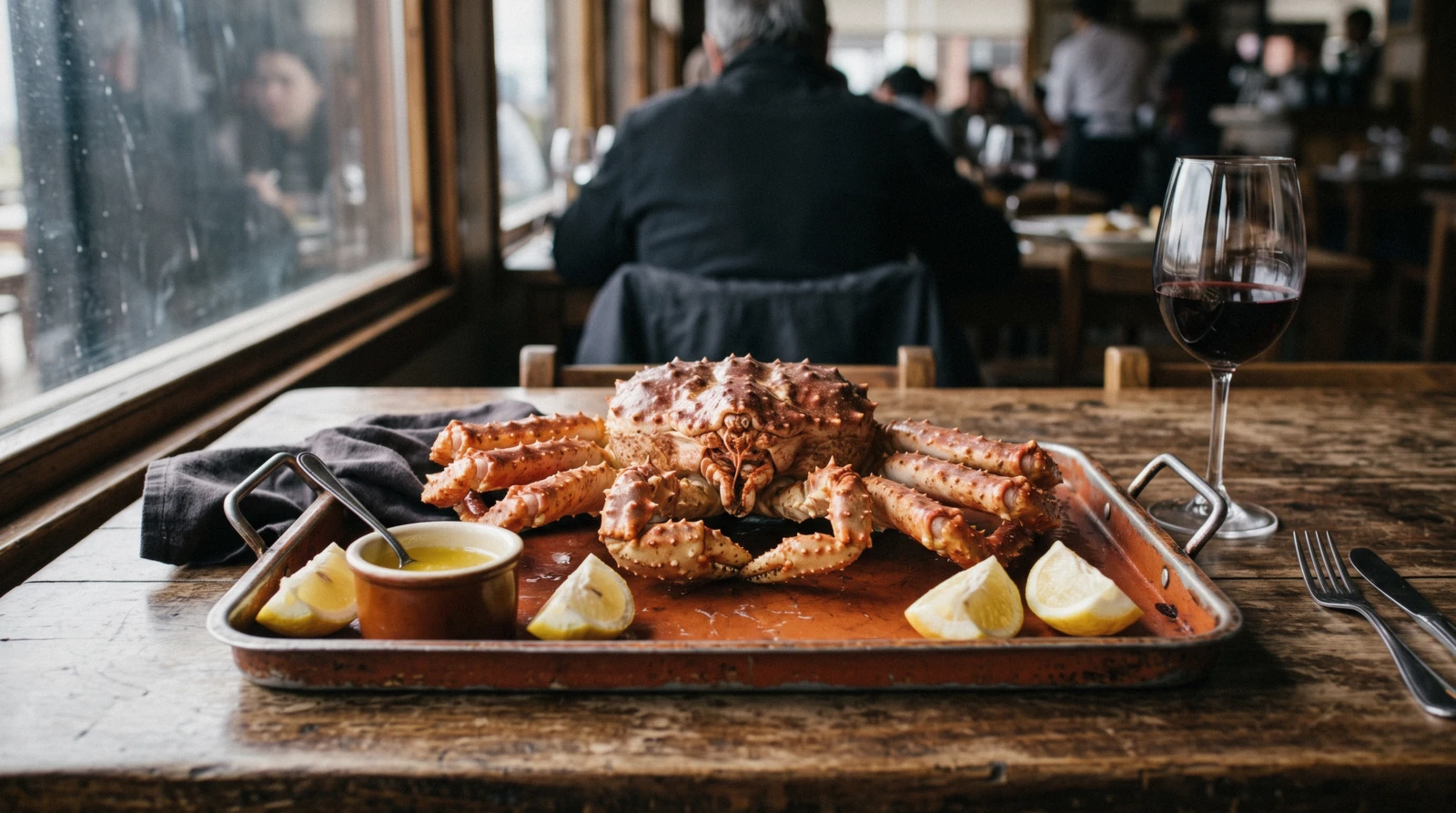
What to Eat in Ushuaia: Centolla and the Fuegian Table
This page owns what to eat in Ushuaia: centolla king crab and its three preparations, cordero fueguino, trucha, calafate desserts and craft beer. For which table to book, use our where to eat in Ushuaia guide. The whole guide starts on the Ushuaia city guide.
Quick answer The short answer on what to eat in Ushuaia
Centolla, the southern king crab, is the dish Ushuaia is known for. It arrives three main ways, al ajo in garlic, gratinada under a cheese crust, or natural, cold with lemon. It is priced by live weight at many tables, so ask the weight before you order. Beyond the crab, the Fuegian plate is cordero al palo, spit-roasted lamb, grilled trucha from local waters, and desserts built on the calafate berry. Chocolate shops sit on every commercial block and helado is a town habit. Craft beer brewed in Tierra del Fuego pairs with all of it.
Key takeaways
- Order centolla by asking for the live weight and the per-kilo chalkboard price first. Our where-to-eat page lists the venues: where to eat in Ushuaia.
- No official source publishes restaurant prices, so budget from visitor reports on our costs page: Ushuaia costs.
- Plan a full Fuegian day around the meals. A morning in the park followed by a crab dinner works well with things to do in Ushuaia.
Centolla, the King Crab
Centolla is the reason many food-motivated travellers ask what to eat in Ushuaia in the first place. This section explains what the animal is, how it reaches the table, and the three preparations you will see on local menus.
What Centolla Is
Centolla is Lithodes santolla, the southern king crab, a species of king crab that lives in the cold waters of the South Atlantic and the Beagle Channel. It is a true crab of the Lithodidae family, related to the Alaskan king crab rather than to the slim-bodied swimmers most people picture. The animal is large by southern standards, with long spiny legs that carry most of the meat, and a body that looks prehistoric next to a shoreline crab. It is often called centolla in Spanish and king crab in English, and both words appear interchangeably on Ushuaia menus.
The crab is fished commercially in Tierra del Fuego waters and it has been part of the local economy for decades. It is the single most photographed plate in town and the anchor of what counts as ushuaia typical food. If a menu reads centolla rellena or chupe de centolla, you are still dealing with the same animal, just folded into other formats.
The Fishery Behind the Plate
Centolla is pulled from cold southern waters by small and mid-sized vessels working the channels around Tierra del Fuego. The fishery is regulated at provincial and national level, and crab reaches the port of Ushuaia fresh, which is what makes the town a reliable place to eat it. Live tanks and iced displays sit at the front of many seafood houses, and you will often see the day's catch weighted and chalked at the door.
We have not found a single official page that publishes current per-kilo crab prices, landings or season quotas in a form a visitor can use. The provincial tourism site and the fishing authority do not list a consumer price. That silence matters: it means the number you are quoted at the door is the real number, and it moves with supply. Treat any figure in a guide, including this one, as a report and confirm on the chalkboard.
The Three Classic Preparations
Three preparations dominate the centolla Ushuaia menu, and they are worth knowing by name before you sit down.
Centolla al ajo arrives hot, the crab legs and body pieces sauteed or served in garlic and parsley oil, sometimes over rice. It is the richest and most aromatic of the three and the safest first order if you have never eaten king crab.
Centolla gratinada goes under a gratin, usually cheese and sometimes cream, and comes back browned from the oven. It is the heaviest plate and a good cold-weather choice after a day outside.
Centolla natural is served cold, the meat cracked and picked, dressed only with lemon and sometimes a little oil. Purists order it this way, because the crab's own flavour, slightly sweet and firm, is the point.
Beyond the trio, menus offer chupe de centolla, a thick stew or casserole, and centolla rellena, the body cavity stuffed and baked. Some kitchens fold the meat into ravioli or into a Risotto. All of these are variations on the same crab, and all of them inherit the weight-pricing logic described when they are built from whole legs.
Weight and Chalkboard Pricing
The defining mechanic of eating centolla in Ushuaia is that the crab is often sold by the kilo of live or whole weight, not as a fixed plate. A chalkboard at the entrance lists a per-kilo figure in pesos. You choose or are shown the crab, the kitchen weighs it, and the final bill follows the scale. This is why two tables in the same room can pay different totals for what looks like the same dish.
The per-kilo figure itself is not published by any official source we can link. We have no verified peso number and therefore no verified dollar conversion for a kilo of centolla. Ask three questions at the door: what is the per-kilo price today, what does an average crab weigh, and does the quoted price include the preparation and sides. Most venues answer all three without prompting. A cautious order is one crab shared between two people with a salad and bread, which keeps the total predictable.
Season and Availability
Centolla is available in Ushuaia year-round in practice, because the fishery supplies the town continuously and frozen stock fills gaps. What changes with the calendar is the fishing calendar and therefore price and freshness on any given week, and we have no official season table to quote. What we can say from the climate record is that the busiest dining weeks fall in the southern summer, from December through February, when average highs sit around 12°C (54°F) and the town is full.
If you are eating crab in peak season, expect the popular rooms to fill early and book ahead using our where to eat shortlist.
Species identification Lithodes santolla is standard malacological naming. Fishery pricing and quotas are not published in a consumer form by any official page we checked, which is itself the finding.
How to Order It Without Overpaying
Centolla is straightforward to order once you know the mechanics. This section walks through the chalkboard, the scale, and payment, so the bill matches what you expected when you asked what to eat in Ushuaia.
Read the Chalkboard First
The price of centolla is written on a board, not in a laminated menu, in most of the seafood houses around the port. That board is the only figure that counts. Menu boards in general are re-chalked as supply changes, so a screenshot from last month's visitor is not evidence.
Walk past two or three front-of-house displays on the same evening and you will often see small differences between venues for the same animal.
Ask the Live Weight
Say the words cuanto pesa, how much does it weigh, and point at the crab you want. A kitchen will tell you the weight of that animal, multiply by the chalkboard kilo price, and quote a total before cooking. If you prefer not to choose, ask for a crab of a size you can afford and let them pick. Sharing one crab between two diners with rice or salad is the local, and cheaper, pattern.
Preparations built from picked meat, like a chupe or a pasta, are sometimes priced as fixed plates rather than by weight, because the crab is not being weighed in front of you. If a fixed plate exists for the dish you want, it removes the scale from the transaction entirely.
The Reported Price Band, Flagged
Here is the honest part. We publish no dollar or peso figure for a centolla meal on this page, because no official source states one and we do not print visitor numbers as fact. Recent traveller reports, which we treat as unverified, place centolla among the more expensive plates in town, well above a pasta or a milanesa.
Our estimate is that you should budget at the top of your food range for the crab night and eat cheaply elsewhere. For the full town budget picture, see Ushuaia costs.
Cash and Card
Cards are widely accepted in Ushuaia restaurants. The site convention matters here: the official price you hand over is in pesos, and card payments clear at the bank rate of the day plus card surcharges, while cash buyers see the blue rate, ARS 1,534 the day we last checked the rate. For a visitor paying in a foreign card, the practical difference is small but real on a large bill.
Carrying some pesos in cash gives you flexibility at smaller venues and at the market, which we come back to in the self-catering section.
Mechanics of weight pricing are reported by visitor practice, not by any official restaurant association page, which publishes nothing. Rate source: Bluelytics official A2A average.
The Fuegian Plate, Compared
This table lines up the dishes that answer what to eat in Ushuaia, from centolla to chocolate, so you can compare what each one is and what we can and cannot say about price. The figures come only from what official sources publish, which for restaurant food is nothing, so the price column states that plainly where it applies. Treat the whole table as a map of the menu, not a price list.
Dish by Dish
Each row below is one signature item. The band column is empty on purpose where no official figure exists. We would rather write not stated than invent a number, because chalkboard prices move weekly and any published figure would age badly.
| Dish | What it is | Reported band |
|---|---|---|
| Centolla (king crab) | Lithodes santolla, the southern king crab, served al ajo, gratinada or natural. Often sold by live weight from a chalkboard kilo price. | Not stated. No official source publishes a per-kilo or per-plate figure. |
| Cordero fueguino | Fuegian lamb, slow-roasted whole on a cross of wood beside an open fire, cordero al palo. Served carved, often with salads or potatoes. | Not stated. Common as part of asado lunch menus on lake and estancia tours, where it is included in the tour price. |
| Trucha | Trout, grilled or pan-fried, from the cold lakes and rivers of Tierra del Fuego. A lighter fish plate than the crab. | Not stated. |
| Calafate sour | A pisco-based sour cocktail built on calafate berries, the local berry of the steppe and forest edge. Served in most bars and many restaurants. | Not stated. |
| Chocolate and helado | Artisan chocolate sold in blocks, bars and alfajores across town, plus ice cream made with calafate and chocolate flavours. | Not stated. |
What This Table Does Not Tell You
The price column is short because the state of official information is short. The municipal and provincial tourism sites list attractions, hours and some museum entry fees, but they do not publish restaurant menus or prices. No hospitality association in the city maintains a public price list we can link. This is worth knowing before you travel, because it changes how you plan: you budget a daily food envelope and refine it on the ground, rather than booking meals to a printed price. Our own arithmetic across the visitor reports we have read is that food in Ushuaia sits above the Argentine national average, driven by the cost of importing most ingredients the length of the country.
Figures current for 2026.
Dish definitions are culinary common knowledge. The absence of official prices is the documented finding.
Calafate and Chocolate
Two sweet threads run through what to eat in Ushuaia. One is a berry with a legend attached. The other is a whole street habit.
The Calafate Berry and Its Legend
Calafate is a small dark blue berry from a shrub of the same name, Berberis microphylla, that grows wild across Patagonia and Tierra del Fuego. It is the basis of jams, liqueurs, desserts and the calafate sour cocktail. The legend attached to it is repeated on every hand-painted sign in the region: eat calafate and you will return to Patagonia. It is a nice piece of folklore and a good excuse to order the jam at breakfast and the sour at dinner.
Calafate flavour is tart, closer to a blueberry crossed with a currant than to anything tropical. It works best in a sour, where the acidity cuts the pisco, or in a cheesecake or ice cream where sugar balances it. Our pick for a first night is the sour, because it doubles as an introduction to a berry you will then meet in three other formats during the trip.
Chocolate as the Town Sweet
Chocolate shops line the commercial streets of Ushuaia in the way they do across Patagonian towns further north. The format is consistent: slabs and bars sold by weight, alfajores of dark or milk chocolate, and small filled chocolates displayed behind glass. Chocolate makes the practical souvenir as well as the dessert, because it travels, it is not fragile in the way ceramics are, and it carries a taste of the place back home.
We name no specific chocolatería on this page, because our sourcing rule for venues is to link official pages and no official directory of chocolate shops exists that we can verify shop by shop. The where-to-eat guide handles the shortlist. What we can say is that the shops cluster in the few pedestrian blocks around Avenida San Martín and San Martín itself, within a short walk of the port, so tasting is a between-museums activity rather than an expedition.
Helado
Helado, artisan ice cream, is a serious habit in a town where summer highs average only 12.4°C (54°F) in February. The flavour list in most heladerías runs the Patagonian standards, chocolate, dulce de leche, cream, and the local addition, calafate. A cone is an afternoon institution here the way it is in Buenos Aires, despite the wind.
It is the cheapest sweet course in town and the one most likely to be eaten walking.
Calafate botanical naming and the return legend are regional common knowledge. No official shop directory is published.
Self-Catering and Supermarkets
Eating in is part of what to eat in Ushuaia for many travellers, especially in apartments and hostels. This section covers what the shelves hold, what the import premium means, and what to pack for a picnic in the national park.
What to Buy
Supermarkets in Ushuaia carry the Argentine standard range: fresh bread, dulce de leche, biscuits, cheese, salame and ham, pasta, rice, eggs, wine and beer. Local additions worth looking for are smoked and preserved trout, centolla meat in tins when it appears, calafate jam, and Patagonian honey. The fish counter, where present, sometimes holds fresh centolla legs and always holds the frozen alternatives.
For a self-catered dinner, the easy formula is pasta with a tin of centolla or a smoked trout flaked through it, bread, cheese and a bottle of Malbec. It is the same crab from the restaurant plate at a fraction of the ceremony, and it is the version locals actually cook.
The Import Premium
Almost nothing grows at scale this far south. Fruit, vegetables and most packaged goods travel by road the length of Argentina, over 3,000 kilometres, before they reach a Ushuaia shelf. That distance shows up in prices, and it is the structural reason food costs more here than in Buenos Aires.
We publish no peso or dollar figure for a basket, because no official body publishes one and supermarket prices shift weekly. The practical planning point is simpler: budget a food envelope roughly at the top of your Argentine expectations, then shop with a list rather than browsing, because impulse buys are what make the bill climb.
A Picnic Kit for the Park
The national park has few food options inside its gates, so most visitors bring lunch. A supermarket picnic travels well. Bread, cheese, salame, fruit, chocolate and a bottle of water covers a day of walking. There are picnic tables at Bahía Ensenada and at Lapataia Bay, and the same shorelines are where the national park tour stops if you would rather have the driving handled. Remember the park entry fee, ARS 40,000 ($26.50) for foreign visitors as a daily pass, is separate from anything you eat.
Pack out what you pack in. The park is a protected area, bins are limited, and the wind on the Beagle Channel shore will take a napkin faster than you can reach for it.
Park entry fee from Parques Nacionales: https://www.argentina.gob.ar/interior/ambiente/parquesnacionales/tarifas
Eating in Ushuaia: Dos and Don'ts
A short field guide to eating well and paying fairly in Ushuaia.
Do
- Ask the per-kilo price and the weight of the centolla before you agree to it.
- Book dinner ahead in the southern summer, when the town fills with cruise passengers.
- Try centolla natural at least once, so you taste the crab itself.
- Carry some pesos in cash for smaller venues and market stalls.
- Buy calafate jam and chocolate as gifts, they travel better than anything else in town.
Don't
- Do not treat a screenshot of an old menu as today's price, chalkboards move weekly.
- Do not assume a fixed-plate centolla dish is priced by weight, ask which system applies.
- Do not plan to buy lunch inside the national park, bring it from a supermarket.
- Do not skip the trout because the crab is famous, it is the lighter and cheaper fish on the menu.
- Do not leave valuables visible in a parked car while you eat, use common safety sense.
Five Things to Take Away
If you remember nothing else from this page, remember these five lines. Each one is sourced to what official pages actually say, or to the honest absence of them.
The Five Lines
These five lines compress the whole argument of the page. If you want the venue-level version of the same story, with names and streets, that is the where to eat guide's job, not this one.
- Centolla, Lithodes santolla, is the signature dish of Ushuaia, served al ajo, gratinada or natural.
- Many venues sell crab by live weight from a chalkboard kilo price, so ask the weight before you order.
- No official page publishes restaurant prices, so every figure in circulation, including any you read elsewhere, is a visitor report.
- Cordero fueguino, spit-roasted lamb, is the meat answer, and trucha is the fish one, and both appear on asado tour lunches as part of the tour price.
- Calafate and chocolate close the meal, and the legend says eat the berry and you will return to Patagonia.
Species naming and weight-pricing practice . Park fee from Parques Nacionales. Rate from Bluelytics, US$1 = ARS 1,508.
Keep Planning
Food is one thread of a Ushuaia trip. These are the pages that complete the picture.
Where to Eat in Ushuaia
The venues for everything on this page, with streets and our shortlist.
not statedUshuaia Costs
The verified prices in town, from park entry to museum tickets, and what stays unverified.
not statedWhat to Eat in Ushuaia: Questions
What is centolla and why is it the Ushuaia dish?
Centolla is Lithodes santolla, the southern king crab, fished in the cold waters around Tierra del Fuego. It is the signature plate of the town, served al ajo in garlic, gratinada under a cheese crust, or natural, cold with lemon.
How is centolla priced in Ushuaia?
Many venues sell it by live weight against a chalkboard per-kilo price. The kitchen weighs the crab and the bill follows the scale. Ask the weight and the per-kilo figure before you agree. No official source publishes the per-kilo price, so treat any figure as a visitor report.
Is centolla available all year?
In practice yes, the fishery supplies the town continuously and frozen stock fills gaps. The busiest dining weeks fall in the southern summer, December through February, so book ahead in that window.
What is a cheaper Fuegian meal than king crab?
Trucha, grilled trout, is the lighter fish plate and typically cheaper than the crab. Self-catering is cheaper again, pasta with tinned centolla or smoked trout from a supermarket is the local home version.
What is calafate?
Calafate is a small dark blue berry from a Patagonian shrub, used in jams, liqueurs, desserts and the calafate sour cocktail. Local legend says that if you eat calafate you will return to Patagonia.
Can I buy centolla to cook myself?
Yes, supermarkets and fish counters in town sometimes hold fresh legs and frozen alternatives, and tinned centolla meat appears on the same shelves. There is no official published retail price, so check the label on the day.
Watch the Fuegian Table
Video material for this page has not been confirmed by an official source, so we publish no embedded clips here rather than invent identifiers. The written sections above carry the full content.
$50 King Crab BARGAIN in Argentina 🇦🇷
Video: Volpe Drunk and HungrySouthern king crab (centolla) lunch in Ushuaia Patagonia
Video: Nancy IoannidisKing Crab in Ushuaia, Argentina
Video: intrepidviajeraBook Around the List
The cards that pair with this page.
 from $66.30
Best seller
from $66.30
Best seller From Ushuaia: Beagle Channel Catamaran Cruise
The classic three-hour channel crossing to the sea lion colony at Isla de los Lobos and the bird islands, passing the Les Éclaireurs lighthouse. The shortest way to say you have sailed the Beagle Channel.
Check AvailabilityPrices, ratings and details are the platform's own. dollar figures are the listed prices — the platform bills in your account's currency.
We may earn a commission if you book through one of our links, at no extra cost to you. Full affiliate disclosure